What Is Dental Scaling?
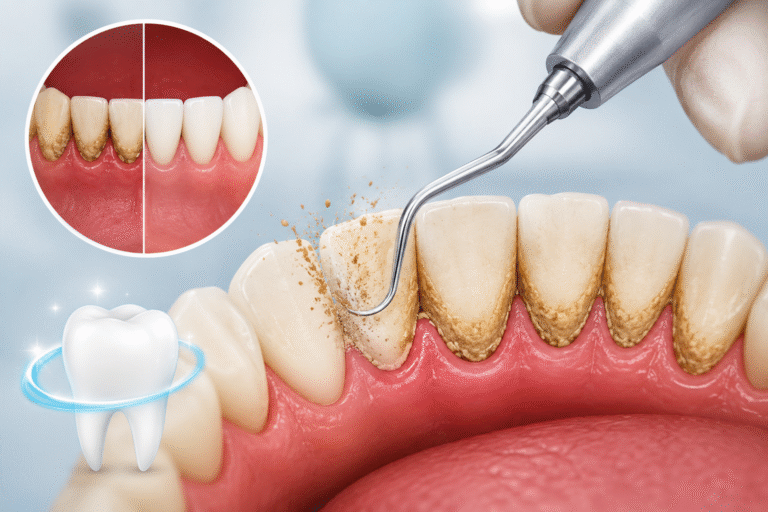
Dental scaling is a professional cleaning procedure that removes plaque and tartar from the tooth surface and below the gumline. Dentists and dental hygienists perform the procedure using hand instruments and ultrasonic scalers. Scaling treats and prevents gum disease by clearing bacterial deposits that brushing cannot reach. Most cases are completed in one or two visits.
Why Is Dental Scaling Needed?
Untreated plaque hardens into tartar that inflames the gums and triggers gingivitis, the earliest stage of gum disease. If it advances to periodontitis, the infection breaks down the bone and fibers that anchor the teeth, which can loosen or cause them to fall out permanently.
Warning signs that scaling is due include red, swollen, or bleeding gums, persistent bad breath, and gums that pull away from the teeth into deep pockets. The CDC reports that about 2 in 5 US adults have some form of gum disease, making timely treatment important.
How Does Dental Scaling Work?
Treatment usually begins with a local anesthetic, since the work reaches beneath the gumline where tissue is often tender. The clinician uses an ultrasonic scaler, which pairs high-frequency vibration with water, followed by fine hand tools called curettes to lift stubborn deposits. 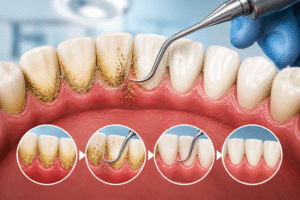
When the roots are involved, scaling is combined with root planing, which smooths the root surfaces so the gums can reattach. As the Cleveland Clinic explains, these two steps together form a dental deep cleaning. For comfort, the mouth is commonly treated one quadrant at a time across separate visits.
Dental Scaling vs Regular Cleaning
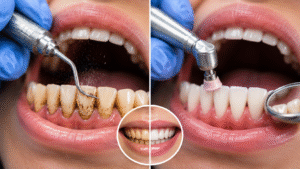
The difference between teeth scaling vs regular cleaning is clinical purpose. A routine cleaning, or dental prophylaxis, is preventive care for healthy mouths, while scaling is a treatment for active gum disease. The table below contrasts the two.
| Aspect | Regular Cleaning | Dental Scaling |
| Purpose | Preventive maintenance | Treats gum disease |
| Depth reached | Above the gumline | Above and below the gumline |
| Best for | Healthy gums | Gingivitis or periodontitis |
| Anesthesia | Not needed | Often numbed |
How Much Does Dental Scaling Cost?
Dental scaling and root planing cost depends on how many areas need treatment, since fees are usually charged per quadrant, or one of four sections of the mouth. In the United States, the procedure typically ranges from about $150 to $350 per quadrant, so a full-mouth deep cleaning often totals several hundred dollars.
Prices also shift with your region, the severity of gum disease, and whether a general dentist or a periodontist performs the work. Dental insurance frequently covers part of the fee when the treatment addresses diagnosed gum disease.
What to Expect After Dental Scaling
Mild soreness, gum tenderness, and tooth sensitivity are normal for a few days after treatment. Minor bleeding and slight swelling can also occur as the gums settle. To support recovery, patients can:
- Eat soft foods and avoid very hot, cold, or spicy items at first.
- Rinse gently with warm salt water to soothe the gums.
- Brush and floss carefully to keep the treated area clean.
Sensitivity usually fades within a week. Contact a dentist if pain worsens, bleeding is heavy, or signs of infection such as pus or fever appear.
Conclusion
Scaling and root planing for gum disease is often the first line of defense, used before surgical periodontal options become necessary. If your gums bleed, feel sore, or have deep pockets, ask your dentist whether scaling is the right next step to protect your smile.
FAQ’s
Is dental scaling painful?
Dental scaling is usually not painful because the area is numbed with local anesthetic. Some soreness and sensitivity are common for a few days afterward but typically ease within a week.
How often is dental scaling needed?
People with gum disease often need scaling every three to four months as part of periodontal maintenance. Those with healthy gums usually need only a standard cleaning twice a year.
Does dental scaling damage or loosen teeth?
No. Dental scaling does not harm healthy teeth; it removes damaging tartar. Teeth may feel slightly loose or sensitive at first because swollen gum tissue tightens as it heals.
Can gum disease come back after dental scaling?
Yes. Scaling clears existing tartar, but plaque can rebuild and cause gum disease again without good oral hygiene. Daily brushing, flossing, and routine dental visits help keep the results long-lasting.